
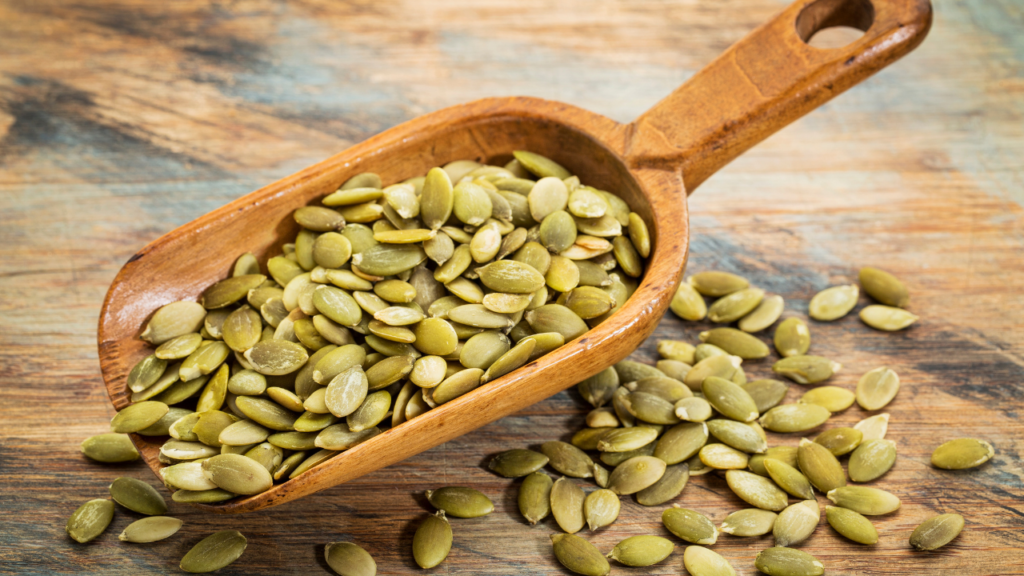
Pumpkin seeds, also called pepitas, are small but packed with nutrients. They’re a good source of magnesium, zinc, protein and healthy fats. Here’s what the research supports about their benefits, how much to eat and what to watch out for.
Quick answer: Pumpkin seeds are rich in magnesium, zinc, iron, protein and healthy fats. They may support heart health, blood sugar control, sleep quality and immunity as part of a balanced diet. A healthy portion is about 1 to 2 tablespoons (15 to 30 g) a day.
Pumpkin Seed Nutrition

| Nutrient | Per 30 g (about 2 tablespoons) |
|---|---|
| Calories | about 160 kcal |
| Protein | about 8 to 9 g |
| Fat (mostly unsaturated) | about 13 to 14 g |
| Fibre | about 2 g |
| Magnesium | about 150 mg (over a third of daily needs) |
| Zinc | about 2 to 2.5 mg |
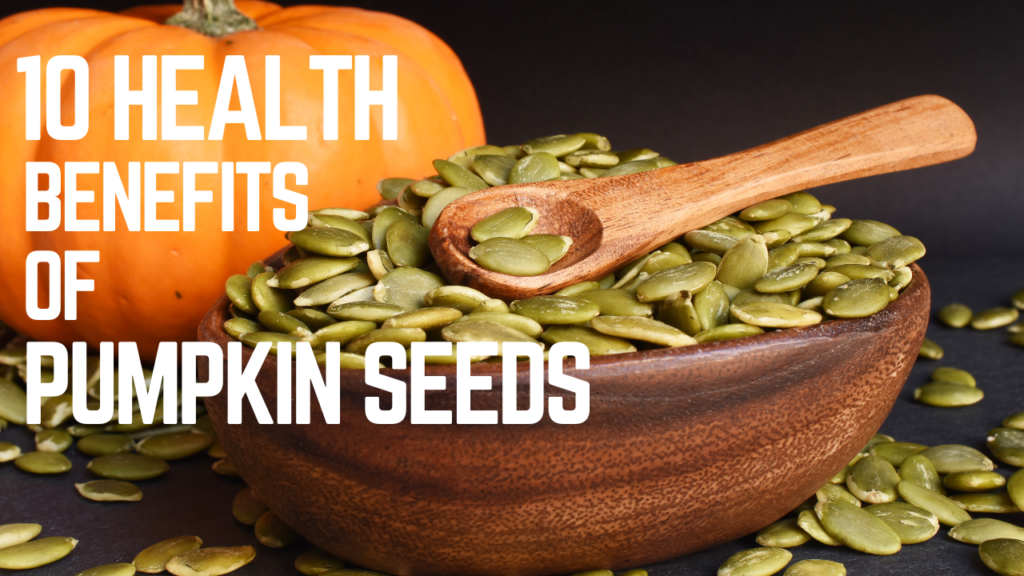
10 Health Benefits of Pumpkin Seeds
1. Rich in Essential Nutrients

They provide magnesium, zinc, iron, phosphorus and protein in a small serving.
2. May Support Heart Health
Their unsaturated fats, magnesium and fibre are all linked with better heart health when part of a balanced diet.
3. Contain Antioxidants
Pumpkin seeds contain vitamin E and carotenoids, which act as antioxidants.
4. Support Digestion

Their fibre helps keep digestion regular. The NHS recommends 30 g of fibre a day for adults.
5. May Help Blood Sugar Control
Magnesium plays a role in how your body uses insulin, and pumpkin seeds are one of the richest food sources.
6. Support Your Immune System
Zinc is important for a healthy immune system, and pumpkin seeds are a good plant source.
7. Plant Protein for Vegetarians
With about 8 to 9 g of protein per 30 g, they’re a useful protein boost for vegetarian meals.
8. May Support Prostate and Urinary Health
Some studies suggest pumpkin seed extracts may help urinary symptoms in men with an enlarged prostate, but more research is needed. Seeds are not a replacement for medical treatment.
9. May Help With Better Sleep
They contain tryptophan and magnesium, which are involved in sleep. A small evening snack of seeds won’t fix poor sleep on its own, but it can be part of good habits.
10. Healthy Fats
Most of their fat is unsaturated, which is the type linked with better heart health.
Risks of Eating Pumpkin Seeds
- High in calories: Easy to overeat. Stick to 1 to 2 tablespoons.
- Digestive upset: Large amounts of fibre at once can cause gas or bloating.
- Salted versions: Choose unsalted or lightly salted seeds.
- Allergy: Rare, but possible. Stop eating them if you notice a reaction.
Easy Ways to Eat Pumpkin Seeds
- Sprinkle on salads, poha, upma or oats
- Mix into curd with fruit
- Add to homemade trail mix with nuts
- Dry-roast them in a pan with a pinch of salt and spices
Frequently Asked Questions
How many pumpkin seeds should I eat a day?
About 1 to 2 tablespoons (15 to 30 g) is a healthy daily amount.
Are roasted pumpkin seeds healthy?
Yes. Dry-roasting keeps most of the nutrients. Avoid heavily salted or oily versions.
Can pumpkin seeds help with weight loss?
They’re filling, but they’re calorie-dense. Use them in small amounts to replace less healthy snacks.
The Bottom Line
Pumpkin seeds are a nutritious snack rich in magnesium, zinc, protein and healthy fats. Enjoy 1 to 2 tablespoons a day on salads, oats or curd as part of a balanced diet, and choose unsalted versions.
This article is for general information only. If you have a medical condition or take medication, please check with your doctor before using seeds or supplements to manage your health.
Sources

About the Author: Nikilesh Srinivasan
Nikilesh Srinivasan has been in the fitness industry for more than 6 years and has trained many people, from complete beginners to regular gym-goers. He writes practical workout and nutrition guides based on that experience, checked against trusted research.


