

To gain weight with a fast metabolism, you have to eat more calories than your body burns, every single day, and lift weights so that the extra food turns into muscle instead of just fat. That is the whole game. It sounds simple, but if you are naturally skinny you already know how hard it is, because your body burns through food quickly and your appetite usually gives up before you hit your target.
The good news is a fast metabolism is not a life sentence of being thin. Plenty of hardgainers put on solid weight once they stop guessing and start eating with a plan. Below you will find exactly how much to eat, what to eat (with lots of Indian food options), how to train, and the mistakes that keep most skinny people stuck.
What Is Metabolism?
Metabolism is all the chemical work your body does to turn food into energy and to build and repair tissue. Breathing, pumping blood, keeping you warm, digesting food, fixing muscle after a workout: all of that costs calories, even when you are lying on the sofa.
It has two sides, and both matter when you want to gain weight.
Catabolism
Catabolism is the breaking down side. Bigger molecules are broken into smaller ones and energy is released. During digestion, for example, carbohydrates become glucose, proteins become amino acids and fats become fatty acids. Your body then uses that energy for muscle contractions, body temperature and every process happening inside your cells.
Anabolism
Anabolism is the building side. Smaller molecules are put together into bigger ones, like amino acids being built into new muscle protein, or glucose being stored as glycogen in your liver and muscles. When you want to gain weight the right way, you are trying to push your body into more anabolism: more building, less breaking down.
Why Some People Burn More Calories
Your total daily calorie burn comes from four things: your resting metabolism (the biggest part), digesting food, planned exercise, and all the moving around you do without thinking, like walking, fidgeting, standing and taking the stairs. That last one is called NEAT, and it varies a lot between people. Many naturally thin people are simply always on the move and burn a few hundred extra calories a day without noticing.
Body size, age, muscle mass and genes all play a part too. A taller, younger, more muscular person burns more at rest. None of this makes weight gain impossible. It just means your calorie target is higher than you think.

Can You Gain Weight With a Fast Metabolism?
Yes, you can. Your metabolism sets how much you need to eat, not whether you can gain. Most people who say “I eat a lot and still don’t gain” are eating a lot at one or two meals and very little the rest of the day. Track your food honestly for three or four days and you will usually find the gap.
In rare cases, a medical problem is behind it. An overactive thyroid, for example, can speed up metabolism and cause weight loss even when you eat well. If you are losing weight without trying, or you also have a racing heart, shaky hands, heavy sweating or stomach problems, see a doctor before you start bulking. The NIDDK guide to hyperthyroidism explains the common signs.
How Many Calories Do You Need to Gain Weight?
Start by finding your maintenance calories, the amount that keeps your weight the same. A quick rough estimate for active people is your body weight in kg multiplied by 33 to 38. A 55 kg guy who trains and walks a lot might maintain at around 1,900 to 2,100 calories. You can also use our guide on how many calories to eat daily to gain weight for a more detailed method.
Then add 300 to 500 calories on top of that. If you are very skinny and gain slowly, you can go up to 500 to 700. Weigh yourself first thing in the morning 3 to 4 times a week and look at the weekly average:
- Gaining 0.25 to 0.5 kg a week: perfect, keep going.
- Not gaining after two weeks: add another 200 to 300 calories a day.
- Gaining more than 0.75 kg a week: you are probably adding too much fat, so pull back by 200 calories.
Do not trust “I feel like I ate a lot.” Trust the scale average and the tape measure.
8 Strategies to Gain Weight With a Fast Metabolism
These are the habits that actually move the scale. You do not need all of them perfect on day one. Get the first three right and you will already see a change.
1. Create a Calorie Surplus
For gaining weight you need to be in a calorie surplus. It means you should eat more calories than your body burns. This is the foundation; nothing else on this list works without it.
When you eat more than you burn, the extra energy gets used to build new tissue and refill glycogen in your muscles and liver. Some of it is also stored as fat, which is normal. Your job is to keep the surplus moderate and train hard so that a good share of the new weight is muscle.
2. Eat Consistently, 5 to 6 Times a Day

Instead of eating 2 to 3 big meals a day, eat 5 or more smaller meals. When you have a fast metabolism and a small appetite, trying to fit 3,000 calories into three plates just does not work. Spread it out and your stomach can handle it.
Set a routine where you eat something every 2 to 3 hours. Add protein to every meal, and carry protein snacks with you so a busy day does not make you skip food. A simple day could look like this:
- Breakfast at 8 am
- Mid-morning snack at 11 am
- Lunch at 1:30 pm
- Evening snack at 5 pm (or your pre-workout meal)
- Dinner at 8:30 pm
- A glass of milk or a shake before bed if you still have room
Set phone reminders for the first few weeks. Skinny people often just forget to eat, and that is one of the biggest reasons they stay stuck.
3. Eat More Protein

Protein is what your body uses to build muscle, so make it part of every meal. Aim for about 1.6 to 2.2 g of protein per kg of body weight each day. For a 60 kg person, that is roughly 95 to 130 g.
Good sources include chicken, fish, eggs, mutton or lean beef, milk, curd, Greek yoghurt, paneer, cheese, dal, rajma, chana, soya chunks, tofu, tempeh and edamame. Mixing animal and plant sources gives you a wider range of nutrients. If you are vegetarian, check our list of high-protein vegetarian foods for more ideas.
If it is hard to hit your protein from food alone, a protein shake can help. Pick a decent quality whey or plant protein and use it as a top-up. Most of your protein should still come from real meals.
4. Choose Calorie-Dense Foods
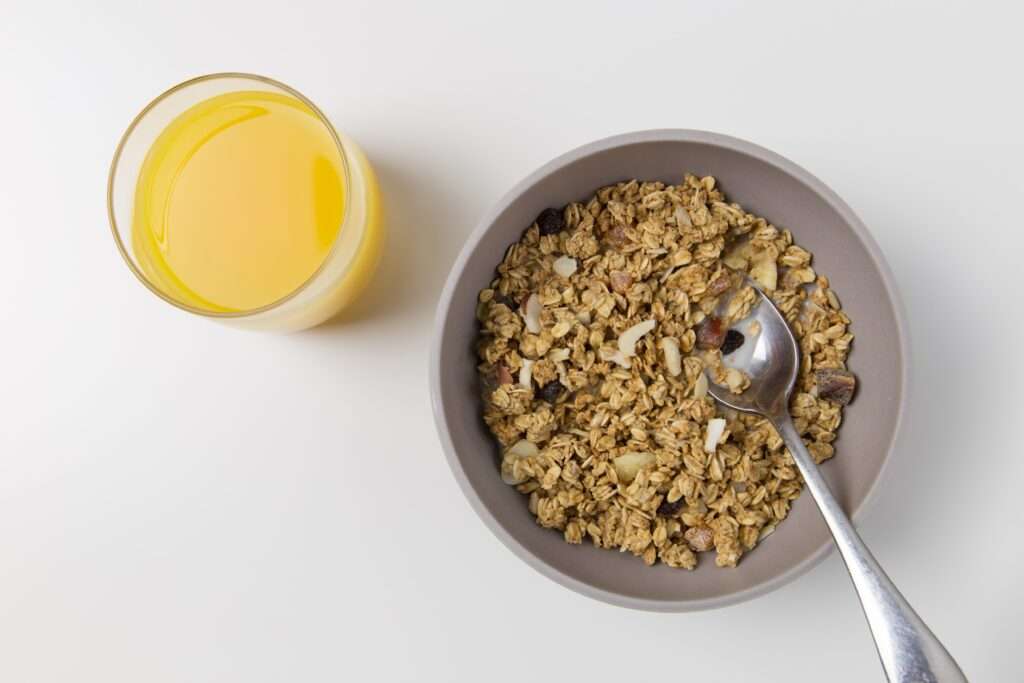


This is where most hardgainers win or lose. If you fill up on salads and clear soups, you will be full long before you hit your calories. You want foods that pack a lot of calories into a small amount of food.
Fiber is good for digestion, so keep some vegetables, fruit and whole grains in each meal. But if you are struggling to eat enough, do not overdo high-fiber, high-volume foods, because they make you feel full fast. Starchy foods like rice, potatoes, sweet potatoes, oats, quinoa and whole wheat roti give you good calories along with fiber.
Easy calorie-dense options:
- Peanut butter (about 95 calories per tablespoon)
- Nuts and dry fruits like almonds, cashews, walnuts, dates and raisins
- Whole milk, curd and paneer
- Ghee or olive oil, 1 to 2 teaspoons added to dal, sabzi or rice
- Bananas, mangoes and chikoo
- Rice, poha, upma, parathas and potatoes
- Eggs and cheese
For more options, see our lists of healthy high-calorie foods for weight gain and high-calorie fruits.
5. Drink Some of Your Calories
Liquid calories are the cheat code for people who get full quickly. A shake goes down in two minutes and barely makes you feel stuffed. One homemade shake with 400 ml whole milk, 1 banana, 3 tablespoons of oats, 1 tablespoon of peanut butter and a few dates gives you roughly 650 to 750 calories.
Have one between meals or after your workout. Our high-calorie smoothies for weight gain have more recipes. Just try not to drink a big shake right before a meal, or you will eat less at that meal.
6. Do Strength Training


Strength training is what decides whether the extra food becomes muscle or just fat. Lifting weights gives your body a reason to build muscle, and over time that changes your shape, not just the number on the scale.
Focus on compound lifts that work several muscles at once: squats, deadlifts, barbell bench press, barbell shoulder press, rows and pull-ups. A simple rep scheme I like for beginners is a pyramid: start with a set of 15 reps, then 12, and finish the last set with 8 reps at a heavier weight.
Train each muscle about 2 times a week, with 3 to 4 sessions in total, and rest at least a day between hard sessions for the same muscles. Try to add a little weight or one more rep each week. That steady progress is what builds muscle. If you want a ready routine, see our best exercises to gain weight and muscle size.
Keep cardio light. A daily walk is fine and good for your heart, but long runs every day will burn the calories you are working so hard to eat.
7. Stay Hydrated, But Not Right Before Meals

Drink water regularly through the day. Water helps digestion, nutrient absorption and muscle function, and even mild dehydration can make your workouts feel worse. Most active adults do well with around 2.5 to 3.5 litres a day, more if you sweat a lot or live somewhere hot. You do not need to force down huge amounts; pale yellow urine is a good sign you are drinking enough.
One tip for hardgainers: avoid drinking a lot of water just before or during meals. It fills your stomach and leaves less room for food. Drink most of it between meals.
8. Manage Stress and Sleep Well

Chronic stress can kill your appetite and mess with your training and recovery. Some people barely eat when they are stressed. Use whatever helps you calm down: yoga, deep breathing, a walk, meditation, or a hobby you enjoy. If work stress makes you skip meals, that is exactly when your meal reminders matter most.

Sleep is when your body repairs and builds muscle. Growth hormone is released mostly during deep sleep, and poor sleep can mess with your appetite hormones and your energy in the gym. Aim for 7 to 9 hours a night. Sleeping less than 7 hours regularly is linked with many health problems, and it will make your training worse.
Sample Meal Plan to Gain Weight With a Fast Metabolism
Here is a simple day of eating at around 2,800 to 3,000 calories with roughly 120 g of protein. Adjust portions up or down based on your own target.
- Breakfast: 2 parathas with curd, 3 boiled eggs (or 100 g paneer bhurji), and a glass of milk
- Mid-morning: a handful of almonds and cashews with 2 bananas
- Lunch: 1.5 cups rice, 1 bowl dal, 150 g chicken curry or rajma, sabzi with a teaspoon of ghee, and salad
- Pre-workout snack: poha or 2 slices of bread with peanut butter
- Post-workout: the banana, oats and peanut butter shake from above
- Dinner: 3 rotis, paneer or fish curry, dal and a vegetable
- Before bed: a glass of warm milk if you are still under your target
Vegetarians can swap the eggs and chicken for paneer, soya chunks, tofu, chana or extra dal and curd. The idea stays the same: protein and calories at every sitting.
Common Mistakes That Stop Hardgainers From Gaining Weight
- Eating big one day and little the next. Your weekly average is what counts. Consistency beats one huge cheat meal.
- Filling up on junk. Chips, sweets and fried snacks add calories, but too much of them leaves you low on protein and nutrients. Use them as extras, not the base.
- Skipping breakfast. That is one fewer chance to eat, and you will rarely make it up later.
- Too much cardio. Running 5 km daily can burn 300 to 400 calories, which might be your entire surplus.
- Changing your workout every week. Stick with a plan for 8 to 12 weeks and add weight to the bar.
- Giving up too early. Real changes take months. Take progress photos and measurements, not just the scale.
Frequently Asked Questions
How do I gain weight with a fast metabolism?
Eat more calories than you burn every day, about 300 to 500 extra. Eat 4 to 6 times a day, choose calorie-dense foods like nuts, peanut butter, milk, rice and ghee in moderation, and do strength training so most of the weight comes as muscle.
What should I eat to gain weight fast with a high metabolism?
Calorie-dense healthy foods help most: whole milk, banana shakes, nuts, dry fruits, paneer, eggs, rice, potatoes, oats and olive oil. Our high-calorie smoothies are an easy way to add calories.
Why can’t I gain weight even though I eat a lot?
Most often, people eat less than they think, or they eat a lot at one meal and less at others. Tracking your food for a few days usually shows the gap. If you still cannot gain, check with a doctor to rule out thyroid or other issues.
How long does it take to gain weight with a fast metabolism?
With a steady calorie surplus, many people gain about 0.25 to 0.5 kg a week. Visible changes often show after 6 to 12 weeks.
Should I do cardio if I want to gain weight?
Keep cardio light and short, such as walking or 2 to 3 short sessions a week. Focus mainly on strength training and eat extra calories to cover any cardio you do.
Can you get fat with a fast metabolism?
Yes. A fast metabolism only means you burn more calories at rest. If you eat more than you burn for long enough, the extra gets stored, partly as fat. That is why the surplus should be small and paired with lifting, so you gain more muscle and less belly.
Do weight gainer shakes work for a fast metabolism?
They work because they are just calories in liquid form. A homemade shake with milk, banana, oats and peanut butter does the same job for less money, and you know exactly what is in it. Use a store-bought gainer only if it fits your budget and you cannot make your own.
The Bottom Line
Gaining weight with a fast metabolism takes extra effort, but it is definitely possible. Eat a little more than you burn every day, spread your food across 5 or 6 meals, get enough protein, lean on calorie-dense foods and shakes, and lift weights with a plan. Check your weekly average weight and adjust your calories when you stall.
Every body is different, so if you have been eating well for months and still cannot gain, talk to a doctor or a registered dietitian to rule out medical causes. The NHS advice for underweight adults is also a good place to start. With patience and a steady routine, even a fast metabolism will give in.
Sources
- International Society of Sports Nutrition position stand: protein and exercise (2017)
- CDC: Sleep in adults, facts and stats

About the Author: Nikilesh Srinivasan
Nikilesh Srinivasan has been in the fitness industry for more than 6 years and has trained many people, from complete beginners to regular gym-goers. He writes practical workout and nutrition guides based on that experience, checked against trusted research.


