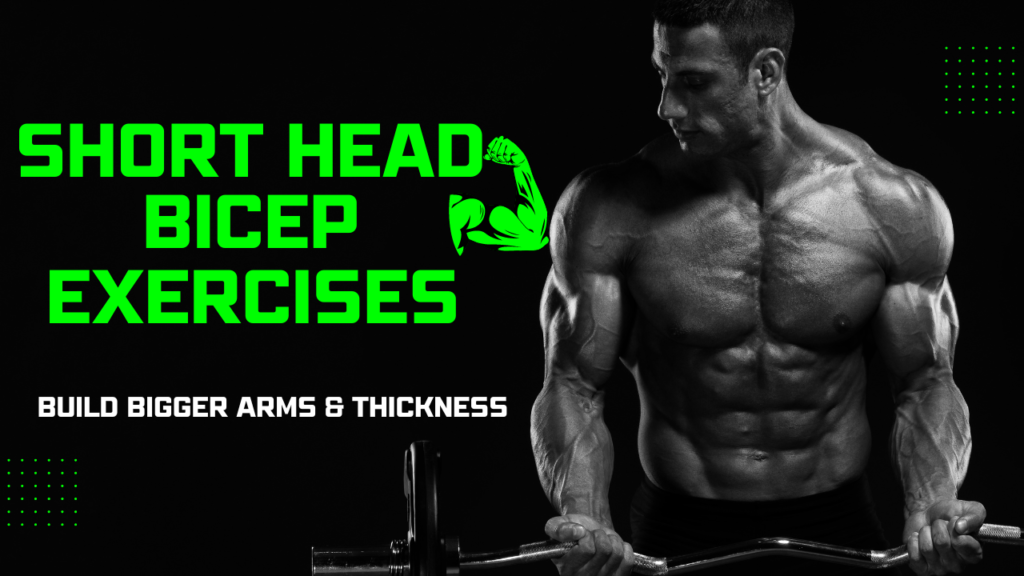
If your arms look thin from the front, training the short head of your biceps can help. In this guide, you’ll learn what the short head is, which exercises target it best, how to do each one with good form, and how to put them together into a workout.
Quick answer: The best short head bicep exercises keep your elbows in front of your body or use a wide grip. Preacher curls, spider curls, concentration curls, cable curls and wide-grip barbell curls are the top picks. Do 2 to 3 of them, for 3 sets of 8 to 12 reps, twice a week.
What Is the Short Head of the Biceps?
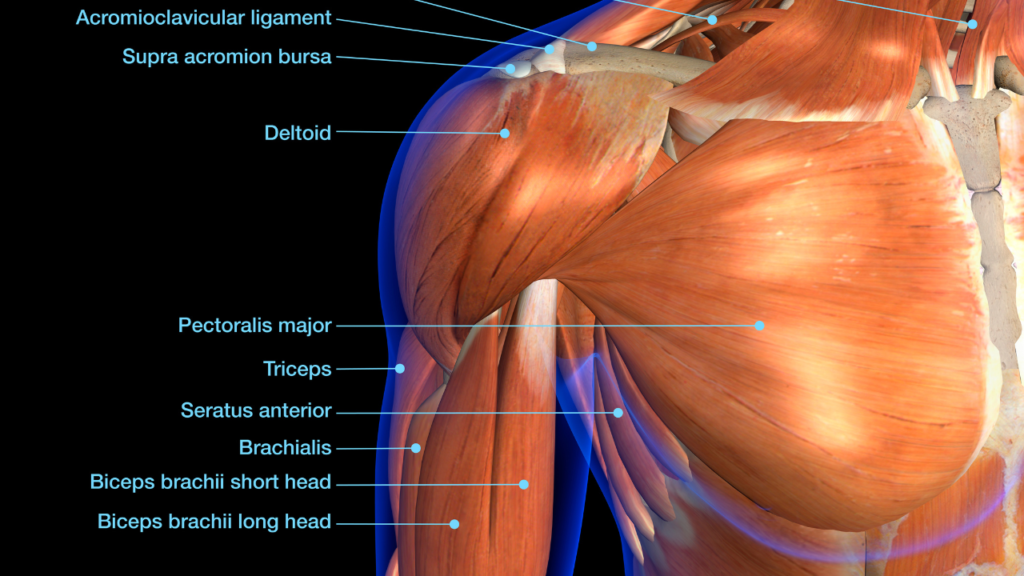
Your biceps has two heads. The long head sits on the outside of your upper arm and gives the “peak”. The short head sits on the inside, closer to your body, and adds width and thickness when you look at your arm from the front.
Both heads work in every curl, so you can’t completely isolate one. But you can shift more of the work to the short head with two simple changes:
- Bring your elbows in front of your body. Curls on a preacher bench or with your arm braced on your leg put more stress on the short head.
- Use a wider grip. Holding the bar slightly wider than shoulder width also shifts emphasis to the inner biceps.
10 Best Short Head Bicep Exercises
1. Cable Bicep Curl
Cables keep tension on the biceps through the whole movement, including the top where dumbbells go slack.
- Set the pulley to the lowest position and attach a straight bar.
- Stand facing the machine and hold the bar with an underhand grip, slightly wider than shoulder width.
- Keep your elbows by your sides and curl the bar up to your chest.
- Squeeze at the top, then lower slowly.
2. Preacher Curl
The preacher bench locks your upper arms in front of your body and stops you from swinging, which makes it one of the best short head exercises.
- Sit at a preacher bench with the backs of your upper arms flat on the pad.
- Hold an EZ bar or dumbbells with an underhand grip.
- Curl the weight up until your forearms are almost vertical.
- Lower slowly until your arms are nearly straight. Don’t let the weight drop at the bottom.
3. Spider Curl
Spider curls are done lying chest-down on an incline bench, so your arms hang in front of you and you can’t use momentum.
- Set a bench to about 45 degrees and lie face down with your chest on the pad.
- Let your arms hang straight down holding dumbbells or an EZ bar.
- Curl the weight up, keeping your upper arms still.
- Squeeze hard at the top and lower slowly.
4. Concentration Curl
Bracing your arm on your thigh keeps the elbow in front of your body and lets you focus on one arm at a time.
- Sit on a bench with your feet wide and lean forward slightly.
- Rest the back of your upper arm against your inner thigh.
- Curl the dumbbell up towards your shoulder, turning your little finger slightly up at the top.
- Lower slowly and finish all reps before switching arms.
5. Wide-Grip Barbell Curl
A grip wider than shoulder width shifts more of the load to the short head while still letting you lift fairly heavy.
- Stand tall and hold a barbell with an underhand grip a little wider than your shoulders.
- Keep your elbows close to your sides and your back straight.
- Curl the bar up without leaning back.
- Lower it under control.
6. Close-Grip EZ Bar Curl
Holding the inner grip of an EZ bar is easier on your wrists than a straight bar and works the biceps well.
- Stand holding an EZ bar on the inner angled grips.
- Keep your elbows by your sides and curl the bar up.
- Lower slowly without swinging.
7. High Cable Curl
With your arms raised out to the sides, this curl works the biceps in a shortened position and is popular for a fuller look.
- Set both pulleys at shoulder height and stand in the middle holding a handle in each hand.
- Raise your arms out to the sides, palms facing up.
- Curl the handles towards your head, keeping your elbows level.
- Return slowly to straight arms.
8. Incline Dumbbell Curl
This one mainly stretches the long head because your arms hang behind you. It’s still worth including for complete biceps development, so pair it with one or two of the exercises above.
- Set a bench to 45 to 60 degrees and lie back with a dumbbell in each hand.
- Let your arms hang straight down, palms facing forward.
- Curl both dumbbells up without moving your elbows forward.
- Lower slowly to a full stretch.
9. Hammer Curl
Hammer curls use a neutral grip, with palms facing each other. They mainly work the brachialis and forearm muscles, which push the biceps up and make your whole arm look thicker.
- Stand holding dumbbells at your sides with palms facing in.
- Curl them up while keeping your wrists straight.
- Lower slowly. You can alternate arms or curl both together.
10. Reverse-Grip Curl
With an overhand grip, this curl mostly trains your forearms and brachialis rather than the short head. It’s a useful finisher for overall arm size and grip strength.
- Hold a barbell or EZ bar with an overhand grip, about shoulder width.
- Keep your elbows by your sides and curl the bar up.
- Lower slowly. Use a lighter weight than for normal curls.
Bicep Curls for Short People: Tips for Better Results
If you’re shorter or have shorter arms, you have a small advantage: each rep covers less distance, so you can often lift relatively more weight. You just need to set up the equipment to fit your body.
- Adjust the preacher bench seat so the pad sits right under your armpits. If it’s too high or low, your elbows won’t stay in place.
- Use an EZ bar or dumbbells if a straight barbell feels too wide for your shoulders.
- Set the cable pulley lower for cable curls, so the cable pulls in a straight line from your hands.
- Keep your grip about shoulder-width. A grip that’s too wide for your frame can strain the wrists and elbows.
- Use the full range of motion. Straighten your arms almost fully at the bottom of each rep, whatever your height.
Height doesn’t limit how big your biceps can get. Consistent training, progressive overload and enough protein matter much more.
Sample Short Head Bicep Workout
| Exercise | Sets | Reps |
|---|---|---|
| Preacher Curl | 3 | 8 to 10 |
| Spider Curl | 3 | 10 to 12 |
| Cable Bicep Curl | 2 | 12 to 15 |
| Hammer Curl | 2 | 10 to 12 |
Rest 60 to 90 seconds between sets. Add a little weight or one more rep each week. This steady progress, called progressive overload, is what makes muscles grow. Train biceps directly about twice a week, with at least one rest day in between.
Common Mistakes to Avoid
- Swinging the weight: If your back moves, the weight is too heavy.
- Cutting the range short: Lower the weight until your arms are nearly straight on every rep.
- Going too heavy on preacher curls: Dropping fast at the bottom can strain the elbow. Control the lowering part.
- Training only biceps: Your triceps make up more of your upper arm, so train them too for bigger arms.
Frequently Asked Questions
Can you really isolate the short head of the bicep?
Not completely. Both heads work in every curl. But keeping your elbows in front of your body or using a wider grip puts more emphasis on the short head.
What is the single best short head bicep exercise?
The preacher curl is one of the best because it fixes your arms in front of your body and stops you from swinging. Spider curls and concentration curls work in a similar way.
How long does it take to see bigger biceps?
With regular training twice a week, enough protein and steady progress, most people notice a difference in 8 to 12 weeks. Beginners usually see results faster.
Do I need heavy weights to grow my biceps?
No. Moderate weights for 8 to 15 reps work well, as long as the last few reps of each set feel hard and you keep good form.
The Bottom Line
To build thicker arms, focus on curls that keep your elbows in front of your body or use a wider grip, such as preacher, spider and concentration curls. Train biceps twice a week, use good form, add weight or reps over time, and eat enough protein to support muscle growth.
This article is for general information only. If you have an injury or a medical condition, are pregnant, or are new to exercise, please check with your doctor before starting a new workout or diet plan.
Sources
- World Health Organization: Physical activity
- International Society of Sports Nutrition position stand: protein and exercise (2017)

About the Author: Nikilesh Srinivasan
Nikilesh Srinivasan has been in the fitness industry for more than 6 years and has trained many people, from complete beginners to regular gym-goers. He writes practical workout and nutrition guides based on that experience, checked against trusted research.