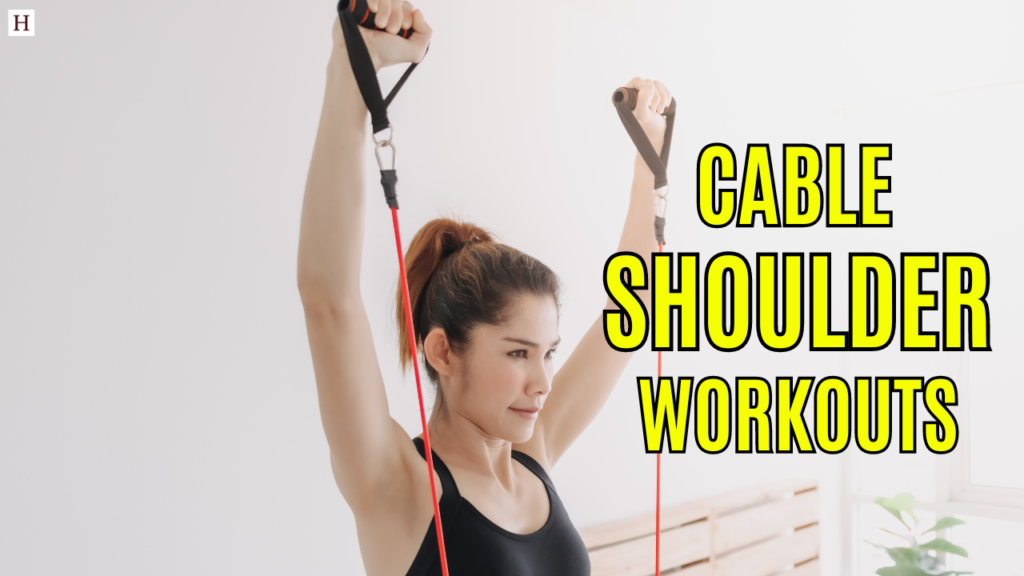
Your shoulders have three parts: the front, side and rear delts. Cables are ideal for training all three because they keep constant tension and let you work from any angle. Here are the 10 best cable shoulder exercises and how to build them into a workout.
Quick answer: The best cable shoulder workouts are cable lateral raises for the side delts, face pulls and reverse flies for the rear delts, and cable front raises and presses for the front delts. Do 4 to 5 exercises, for 3 sets of 10 to 15 reps, once or twice a week.
10 Best Cable Shoulder Workouts
1. Cable Shoulder Press
Builds overall shoulder strength and size.
- Sit on a bench between two low pulleys, holding a handle in each hand at shoulder height.
- Press the handles up until your arms are straight.
- Lower slowly.
2. Cable Lateral Raise
The best cable exercise for wider shoulders.
- Stand side-on to a low pulley holding the handle with your far hand.
- Raise your arm out to the side to shoulder height with a slight elbow bend.
- Lower slowly and switch sides.
3. Cable Front Raise
Targets the front delts.
- Stand facing away from a low pulley, holding a handle or bar between your legs.
- Raise it straight in front of you to shoulder height.
- Lower slowly.
4. Face Pull
Builds the rear delts and helps shoulder health.
- Pull a rope on a face-height cable towards your face, separating the ends.
- Squeeze your shoulder blades together and return slowly.
5. Cable Upright Row
Works the side delts and traps. Use a wider grip and stop at chest height if your shoulders feel pinched.
- Hold a straight bar on a low pulley with a shoulder-width grip.
- Pull it up towards your chest, leading with your elbows.
- Lower slowly.
6. Cable Reverse Fly
Isolates the rear delts.
- Set both pulleys at shoulder height and cross the cables.
- Pull your arms out wide with slightly bent elbows.
- Return slowly.
7. Cable Shrug
Builds the upper traps, which frame your shoulders.
- Hold a straight bar on a low pulley and lift your shoulders towards your ears.
- Pause and lower.
8. Single-Arm Cable Front Raise
Lets you focus on one front delt at a time.
- Stand facing away from a low pulley holding the handle in one hand.
- Raise your arm to shoulder height, lower slowly and switch.
9. Alternating Cable Shoulder Press
Pressing one arm at a time challenges your core and balance.
- Set up as for the cable shoulder press.
- Press one arm up, lower it, then press the other.
10. Cable Y-Raise
Works the lower traps and rear shoulders for better posture.
- Stand between two low pulleys holding the opposite handles.
- Raise your arms up and out into a Y shape above your head.
- Lower slowly. Use a light weight.
Sample Cable Shoulder Workout
| Exercise | Sets | Reps |
|---|---|---|
| Cable Shoulder Press | 3 | 8 to 12 |
| Cable Lateral Raise | 4 | 12 to 15 per side |
| Face Pull | 3 | 12 to 15 |
| Cable Front Raise | 2 | 12 to 15 |
| Cable Reverse Fly | 2 | 12 to 15 |
Benefits of Cable Shoulder Workouts
- Constant tension: Especially useful for lateral raises, which go slack at the bottom with dumbbells.
- Joint-friendly: Smooth resistance suits sensitive shoulders.
- Balanced shoulders: Easy to train the often-neglected rear delts.
Frequently Asked Questions
Are cable shoulder workouts suitable for beginners?
Yes. Start with light weights and focus on slow, controlled movements, especially for lateral raises and face pulls.
How often should I train shoulders with cables?
Once or twice a week. Your front delts also work during chest presses, so focus extra work on the side and rear delts.
Are cables better than dumbbells for shoulders?
Neither is better. Cables keep tension throughout, while dumbbells let you load heavier presses. Using both works well.
The Bottom Line
Cable shoulder workouts let you train the front, side and rear delts with constant tension. Prioritise lateral raises and rear-delt work for a rounder, wider look, keep the weights light enough for good form, and train shoulders once or twice a week.
This article is for general information only. If you have an injury or a medical condition, are pregnant, or are new to exercise, please check with your doctor before starting a new workout or diet plan.
Sources

About the Author: Nikilesh Srinivasan
Nikilesh Srinivasan has been in the fitness industry for more than 6 years and has trained many people, from complete beginners to regular gym-goers. He writes practical workout and nutrition guides based on that experience, checked against trusted research.