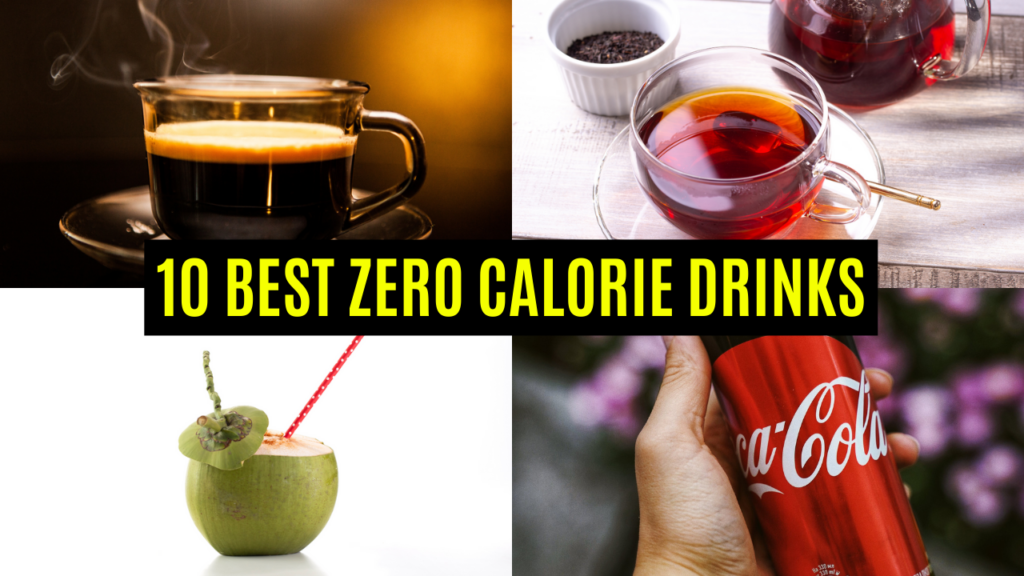
The best zero-calorie drinks are plain water, sparkling water, black coffee, unsweetened black tea, green tea and herbal tea. Diet sodas like Coke Zero and Pepsi Zero also have zero calories, but they contain artificial sweeteners, so they are best kept to a small amount. Drinks like unsweetened almond milk and coconut water are not truly zero-calorie, but they are low in calories and can be healthy swaps.
Zero-calorie drinks have become very popular as more people try to stay healthy and manage their calories. Swapping one sugary soft drink or sweetened juice a day for a zero-calorie drink can cut 100 to 200 calories a day. In this guide, you’ll learn the 10 best zero-calorie drinks, which ones are actually healthy, the truth about diet sodas and sweeteners, the best options for workouts, and simple Indian swaps.
What Counts as a Zero-Calorie Drink?
A zero-calorie drink gives you no calories, or so few that they hardly count. Many labels follow a rule where a drink with fewer than 5 calories per serving can be called “zero calorie” or “calorie-free”. So a cup of black tea with 2 calories is counted as zero-calorie.
There are two kinds of zero-calorie drinks:
- Naturally zero-calorie drinks: water, sparkling water, black coffee, plain tea and herbal tea. These are the healthiest choices.
- Sweetened zero-calorie drinks: diet sodas and “zero sugar” drinks that use sweeteners like aspartame, sucralose, acesulfame potassium or stevia instead of sugar.
10 Best Zero-Calorie Drinks With Their Benefits
Here are the top 10 zero-calorie and very low-calorie drinks, what they contain and how healthy they are.
1. Black Coffee

Black coffee is one of the healthiest zero-calorie drinks. It is made from coffee beans and water, so a cup has only about 2 calories. Once you add sugar, honey, cream or full-fat milk, the calories go up quickly.
Black coffee can help with weight loss because it has almost no calories and can reduce your appetite a little. Its caffeine also helps during workouts by making you feel more alert and less tired. Many people drink a cup about 30 to 60 minutes before exercise.
Black coffee is rich in antioxidants that help fight oxidative stress and inflammation. In studies, people who drink coffee in moderation have a lower risk of type 2 diabetes and liver disease. It may also support physical performance.
How much is safe? The FDA says up to 400 mg of caffeine a day is generally safe for healthy adults. That is about 3 to 4 small cups of brewed coffee. Pregnant women should limit caffeine to about 200 mg a day. Avoid coffee late in the day if it affects your sleep.
2. Black Tea

Black tea is very low in calories. The few calories it has come from the natural carbohydrates in tea leaves. One cup (240 ml) without sugar or milk gives you only about 2 to 5 calories, which makes it a great zero-calorie drink.
To keep it calorie-free, skip sugar and honey. Black tea is rich in antioxidants called polyphenols, which help reduce oxidation and inflammation. Drinking tea regularly is linked to a lower risk of stroke and heart disease, better blood pressure, and better gut health.
Indian tip: a regular cup of sweet milk chai can have 80 to 120 calories. Try black tea with lemon, ginger or a little cinnamon instead, or reduce the sugar slowly.
3. Green Tea

Green tea is one of the healthiest drinks and has almost zero calories. It is made from unfermented tea leaves and contains a small amount of caffeine (usually less than coffee) which gives you gentle energy.
Drink green tea without sugar or honey to keep it zero-calorie. Many people like it in the morning or after meals because it makes them feel fresh and active.
Green tea is rich in antioxidants called catechins, especially EGCG, which help fight oxidative stress and reduce inflammation. It is linked to better heart health, lower risk of type 2 diabetes and better dental health. It may slightly boost fat burning, but the effect is small, green tea helps most when it replaces sugary drinks. Avoid high-dose green tea extract pills, which have been linked to liver problems.
4. Coke Zero

Coca-Cola Zero Sugar (Coke Zero) is a zero-calorie, sugar-free version of Coca-Cola. It is made to taste as close as possible to regular Coke. Diet Coke is a different zero-calorie drink with its own taste. Both use artificial sweeteners like aspartame and acesulfame potassium instead of sugar.
A regular 330 ml can of Coke has about 35 g of sugar and about 140 calories. Coke Zero has none, so switching can help with weight management, especially if you drink soft drinks often. Like regular Coke, it also contains caffeine.
However, Coke Zero has no nutrients, and it is acidic, which can harm your teeth over time. It is better as an occasional drink than something you have every day. If you have a health condition, check with your doctor before making it a regular part of your diet.
5. Unsweetened Almond Milk

Unsweetened almond milk is a very low-calorie drink rather than a true zero-calorie one. It is made by blending almonds with water and straining the liquid. A cup (240 ml) usually has about 30 to 40 calories, much less than a cup of whole cow’s milk (about 150 calories).
The unsweetened version has no added sugar, which makes it a good low-calorie choice. It is popular as a dairy-free option for people who are lactose intolerant, vegan or trying to cut calories. Many brands add calcium and vitamins D and E.
Keep in mind that almond milk has very little protein (about 1 g per cup) compared to cow’s milk or soya milk (about 7 to 8 g). Use it in coffee, smoothies, oats and other recipes, but get your protein from other foods.
6. Herbal Tea

Herbal tea is one of the best zero-calorie drink options. It is made by steeping dried herbs, flowers, fruits or spices in hot water. Popular ones include chamomile, peppermint, ginger, tulsi, hibiscus and lemongrass. Most herbal teas are naturally caffeine-free, so you can drink them in the evening.
To keep herbal tea zero-calorie, avoid sugar and honey. It is very helpful for people who want to reduce their calories and still enjoy a warm, tasty drink. Different herbs offer different benefits: ginger and peppermint can help digestion, chamomile may help you relax before bed, and hibiscus may help lower blood pressure a little. If you are pregnant or take medicines, check with your doctor before drinking herbal teas regularly.
7. Pepsi Zero

Pepsi Zero Sugar is a sugar-free and calorie-free drink for people who want the taste of Pepsi without the calories. It uses artificial sweeteners such as aspartame and acesulfame potassium, which give sweetness without adding calories.
Like regular Pepsi, it contains caffeine. People with phenylketonuria (PKU), a rare genetic condition, must avoid aspartame, so drinks with aspartame carry a warning on the label. Like other diet sodas, Pepsi Zero has no nutrients, so treat it as an occasional drink.
8. Coconut Water

Coconut water is a low-calorie drink, not a zero-calorie one. It has about 45 to 60 calories per cup (240 ml), which is still far less than juice or soft drinks.
It is known as a natural hydrating drink because it has electrolytes like potassium, sodium, magnesium and calcium. Because these electrolytes help replace fluids and minerals, coconut water is a popular choice after exercise or in hot weather. In India, fresh tender coconut water (nariyal pani) is a great choice; packaged versions sometimes have added sugar, so check the label.
Coconut water is naturally fat-free and cholesterol-free, and contains vitamin C, some B vitamins, manganese and potassium. People with kidney disease should ask their doctor before drinking it often because of its high potassium.
9. Sparkling Water

Sparkling water is a true zero-calorie drink. It is made by dissolving carbon dioxide gas in water under pressure. This process, called carbonation, creates carbonic acid, which gives the water its bubbles. Carbonation does not add any calories.
Sparkling water is a great swap for soda because it gives you the same fizzy feel without sugar or calories. Be careful with flavored varieties and “tonic water,” which can have added sugar. Choose plain sparkling water and add lemon, lime, mint or cucumber for flavor. Some people find the bubbles make them bloated; if so, choose still water.
10. Diet Soda

Diet soda is a carbonated drink with the taste of regular soda but little or no calories. The main reason is that it uses sugar replacements or artificial sweeteners, such as aspartame, sucralose, saccharin or stevia. These add sweetness without adding many calories. Like regular soda, it is carbonated to create bubbles.
Switching from regular soda to diet soda can help you cut sugar and calories. But diet soda is not a health drink. It has no nutrients, it is acidic, and the long-term effects of sweeteners are still being studied. Water, sparkling water and unsweetened tea are better everyday choices.
Plus: Plain Water and Infused Water
The best zero-calorie drink of all is plain water. It hydrates you, has no calories, sugar or additives, and costs almost nothing. Most adults need about 2 to 3 litres of fluids a day, more in hot weather or when you exercise.
If plain water feels boring, make infused water by adding slices of lemon, cucumber, orange, mint leaves, ginger or a few berries to a bottle of water. Indian favourites like jeera water, ajwain water and nimbu pani without sugar are also zero or near-zero calorie.
Calories in Common Drinks: Quick Comparison
| Drink (about 240 ml) | Calories (approx.) |
|---|---|
| Water or sparkling water | 0 |
| Black coffee | 2 |
| Black, green or herbal tea (no sugar) | 0 to 5 |
| Coke Zero, Pepsi Zero, diet soda | 0 to 1 |
| Unsweetened almond milk | 30 to 40 |
| Coconut water | 45 to 60 |
| Sweet milk chai | 80 to 120 |
| Regular cola | 100 |
| Orange juice | 110 |
| Whole milk | 150 |
Are Zero-Calorie Drinks Healthy?
It depends on the drink. Water, sparkling water, black coffee and unsweetened tea are healthy and can be part of your daily diet. Diet sodas are a different story.
What About Artificial Sweeteners?
Sweeteners like aspartame, sucralose and acesulfame potassium are approved as safe within daily limits by food safety agencies. In 2023, a WHO cancer agency listed aspartame as “possibly carcinogenic” based on limited evidence, while a separate WHO expert committee said the current daily limit is still safe. Also in 2023, the WHO advised against using non-sugar sweeteners as a long-term tool for weight control, because they did not show lasting weight-loss benefits.
The simple takeaway: diet soda is better than regular soda, but water and unsweetened tea or coffee are better than both. If you drink a lot of diet soda, try to cut down slowly and use sparkling water with lemon instead.
Drinks That Look Healthy but Are Not
- Fruit juices: even 100% juice has a lot of sugar and little fiber. Eat whole fruit instead.
- Packaged lemonade and iced tea: usually high in added sugar.
- Energy drinks: high in sugar, caffeine or both.
- Flavored “vitamin” water: often contains added sugar.
- Sports drinks: useful only for long, intense exercise. For normal gym sessions, water is enough.
Best Zero-Calorie Drinks for Workouts
For most workouts under an hour, plain water is all you need. For extra energy, a cup of black coffee or green tea 30 to 60 minutes before training can help you feel more alert, see our guide on how long pre-workout lasts. After a long or sweaty workout in hot weather, add a pinch of salt and lemon to water, or have coconut water to replace electrolytes.
Zero-Calorie Drinks for Weight Loss
Zero-calorie drinks do not burn fat on their own, but they help by replacing high-calorie drinks. Liquid calories don’t fill you up the way food does, so cutting them is one of the easiest ways to eat less. For example, swapping two sweet chais and one cola a day for black tea and sparkling water can save about 250 to 300 calories a day.
Pair these drinks with a healthy diet and regular exercise for the best results. Read our guides on how to lose weight fast in 2 weeks and how to lose belly fat in 2 weeks.
Benefits of Zero-Calorie Drinks
Here are the top 4 benefits of choosing zero-calorie drinks.
1. Calorie Control
The most obvious benefit is that zero-calorie drinks help you control your calorie intake. This is especially important if you want to lose weight or maintain a healthy weight.
2. Less Sugar
Zero-calorie drinks are sugar-free, so they are a good choice if you want to cut down on sugar. Too much added sugar is linked to obesity, type 2 diabetes, fatty liver and tooth decay.
3. Supports Weight Management
If you are trying to lose or control your weight, zero-calorie drinks make it easier to stay in a calorie deficit. They give you tasty options without adding calories to your diet.
4. Hydration
Water, sparkling water, tea and herbal tea all help keep you hydrated. Staying hydrated is important for energy, digestion, body temperature and overall health. Coffee and tea also count towards your daily fluids.
Choosing a diet soda? See my ranking of the healthiest zero calorie sodas, from sparkling water to Diet Coke, Coke Zero and Pepsi Zero Sugar.
Frequently Asked Questions
What are the best zero calorie drinks?
Water, sparkling water, black coffee, plain green tea, herbal teas and water infused with lemon, mint or cucumber are the best zero-calorie drinks.
Are zero calorie drinks healthy?
Plain water, tea and coffee are healthy. Diet sodas with sweeteners have no calories, but they have no nutrients either, so they are best kept to a small amount.
Do zero calorie drinks help with weight loss?
Swapping sugary drinks for zero-calorie drinks can cut many calories a day and help weight loss. They work best alongside a healthy diet.
How can diet sodas have no calories?
They use low- or no-calorie sweeteners like aspartame, sucralose or stevia instead of sugar. These taste sweet but give almost no energy.
What can I drink instead of energy drinks?
Black coffee, green tea or sparkling water with lemon are good choices. They give a lift without the sugar. See our zero calorie snacks to pair with them.
Is coconut water a zero-calorie drink?
No. Coconut water has about 45 to 60 calories per cup. It is low in calories and rich in electrolytes, but it is not zero-calorie.
Does lemon water have zero calories?
Almost. The juice of half a lemon in water has only about 5 to 10 calories, as long as you don’t add sugar or honey.
What are the best zero-calorie drinks for weight loss in India?
Easy, low-cost picks are plain water, nimbu pani made without sugar, black tea or green tea without sugar, black coffee, and jeera or saunf water. These have zero or almost zero calories. Just skip the sugar and honey, because 2 teaspoons of sugar add about 30 calories to each cup.
Are there zero-calorie sodas without artificial sweeteners?
Yes. Plain soda water and unsweetened sparkling water have no calories and no sweeteners at all. Add lemon, mint or a few slices of cucumber for flavour. Some sodas are sweetened with stevia or monk fruit instead of aspartame or sucralose. These come from plants, but they are still sweeteners, so treat them as an occasional drink. Always check the label, because some “natural” sodas also contain sugar or fruit juice.
What is the best zero calorie drink for workouts?
Plain water is still the best choice for most workouts. If you train for more than an hour or sweat a lot, a zero-sugar electrolyte drink can replace the salt you lose without adding calories. A cup of black coffee 30 to 60 minutes before training is another good option if you want a little extra energy. Save sugary sports drinks for long endurance sessions.
What are the best low calorie sodas?
If you miss the taste of soda, Coke Zero, Pepsi Zero and other diet sodas have zero or close to zero calories. If you want no sweeteners at all, sparkling water with a squeeze of lemon or lime is the best pick. Keep diet sodas to one or two cans a day and drink plain water for the rest.
The Bottom Line
The best zero-calorie drinks are plain water, sparkling water, black coffee, black tea, green tea and herbal tea. They keep you hydrated, have no sugar, and can help you manage your weight. Diet sodas like Coke Zero and Pepsi Zero have no calories but also no nutrients, so keep them occasional. Unsweetened almond milk and coconut water are low-calorie rather than zero-calorie, but can still be healthy choices.
Start with one simple swap a day, like black tea instead of sweet chai or sparkling water instead of cola. For something to eat alongside them, see our list of zero-calorie snacks for weight loss.
Sources
- FDA: Spilling the Beans, How Much Caffeine is Too Much?
- World Health Organization: Guideline on non-sugar sweeteners (2023)
- NHS: The Eatwell Guide

About the Author: Nikilesh Srinivasan
Nikilesh Srinivasan has been in the fitness industry for more than 6 years and has trained many people, from complete beginners to regular gym-goers. He writes practical workout and nutrition guides based on that experience, checked against trusted research.