
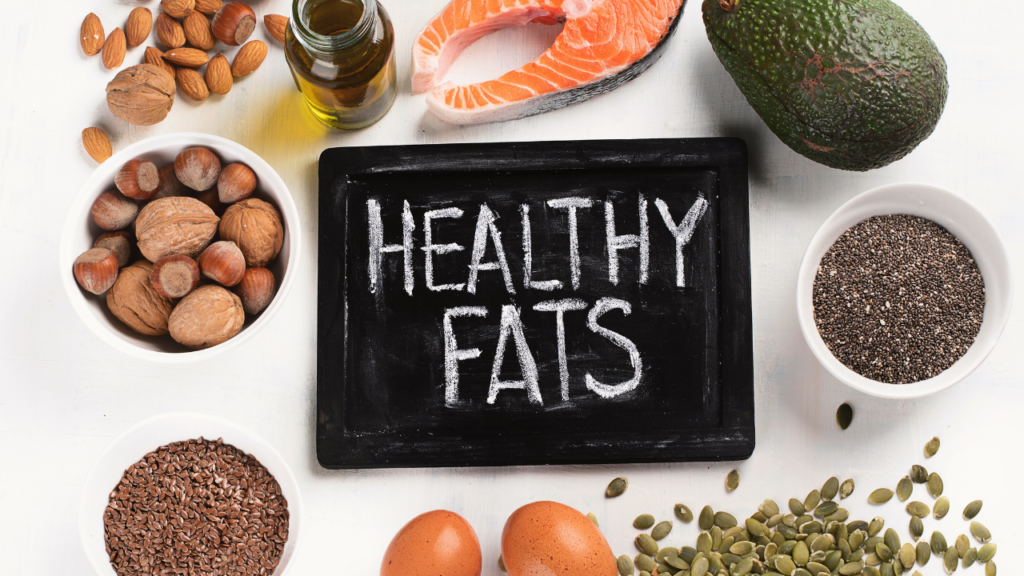
The healthiest high-fat foods are avocados, nuts, chia and flax seeds, fatty fish, olive oil, peanut butter, full-fat yogurt, cheese and dark chocolate. They give you mostly unsaturated fats (or dairy fats in a whole-food form) along with protein, fibre, vitamins and minerals. Eaten in sensible portions, they support your heart, brain and hormones and keep you full.
Fat got a bad name for years, and a lot of people still try to cut it out completely. That’s a mistake. Your body needs fat to absorb vitamins A, D, E and K, to make hormones and to build every cell in your body. What matters is the type of fat and the amount.
Health organisations, including the American Heart Association, advise limiting saturated fat. The Dietary Guidelines for Americans recommend keeping it under 10% of your total daily calories. Some research suggests saturated fat from whole dairy foods may not affect heart health the same way as fat from processed red meat, but the overall advice is still to favour unsaturated fats.
Below you’ll learn the types of fat, the 10 best high-fat foods with their benefits and portions, Indian high-fat foods to choose, and how much fat to eat each day.
Types of Dietary Fat
What Are Saturated Fats?
Saturated fats are mostly solid at room temperature. They are found mainly in animal foods and dairy, like red meat, cheese, butter, ghee and whole milk, and in coconut oil and palm oil.
Eating a lot of saturated fat can raise LDL cholesterol, often called “bad” cholesterol, which is a risk factor for heart disease. You don’t need to avoid it completely, but keep it moderate.
What Are Unsaturated Fats?
Unsaturated fats are mostly liquid at room temperature and are known as healthy fats. Replacing saturated fat with unsaturated fat is linked with better heart health, lower inflammation and good brain function. There are two types.
1. Monounsaturated Fats
These are liquid at room temperature and can turn semi-solid in the fridge, like olive oil does. Good sources include:
- Olive oil and groundnut oil
- Avocado
- Almonds, cashews and peanuts
- Seeds like sesame
2. Polyunsaturated Fats
These stay liquid even when chilled. They include two essential fats your body can’t make:
- Omega-3 fatty acids: important for heart and brain health and have anti-inflammatory effects. Found in fatty fish like salmon, mackerel and sardines, and in chia seeds, flax seeds and walnuts.
- Omega-6 fatty acids: also essential, found in vegetable oils like sunflower and soybean oil, and in nuts and seeds. Most diets already have plenty, so the goal is to get more omega-3 to balance them.
What About Trans Fats?
Trans fats are the ones to avoid. They are found in vanaspati, some margarines, many bakery items and foods deep-fried in reused oil. They raise LDL and lower HDL (“good”) cholesterol at the same time. Check labels for “partially hydrogenated oil”.
10 Healthy High-Fat Foods and Their Benefits
1. Cheese

Cheese is a healthy high-fat food when you eat it in moderation. It is nutrient-dense and one of the best sources of calcium, along with phosphorus, vitamin B12 and riboflavin.
Most of the fat in cheese is saturated, with some monounsaturated and a little polyunsaturated fat. It is also a good source of protein, about 6 to 7 g in a 28 g slice of cheddar, which helps your muscles and keeps you full.
Eating a lot of cheese can raise LDL cholesterol in some people, and many processed cheeses are very salty. Stick to 1 or 2 slices or a small cube a day and choose real cheese over processed spreads.
2. Chia Seeds

Chia seeds look tiny, but about 30% of their weight is fat, and most of that is alpha-linolenic acid (ALA), a plant omega-3. They are a very good choice for vegetarians who don’t eat fish.
Chia seeds are also packed with fibre, about 10 g in 28 g, plus protein, calcium and magnesium. Their fibre helps digestion and slows down how fast sugar enters your blood.
Fat content: about 9 g per 28 g (2 tablespoons).
3. Flax Seeds

Flax seeds are one of the richest plant sources of ALA omega-3. They also give fibre, protein, magnesium, manganese and B vitamins, along with lignans, plant compounds with antioxidant effects.
Grind your flax seeds before eating them. Whole seeds often pass through your body undigested, so you miss the fats. Add a tablespoon of ground flax to your atta, curd, oats or smoothies.
Fat content: about 42 g per 100 g, or roughly 4 g per tablespoon of ground flax.
4. Avocado

Avocado is one of the healthiest high-fat foods because it combines healthy fat with fibre, vitamins and minerals. Most of its fat is monounsaturated oleic acid, the same fat found in olive oil, which helps lower LDL cholesterol when it replaces saturated fat.
Avocados also give fibre (around 10 g per fruit), potassium, vitamin K, vitamin E, vitamin C, B vitamins and the antioxidants lutein and zeaxanthin for eye health.
Fat content: about 20 to 22 g in a medium avocado. Half an avocado is a good serving.
5. Fatty Fish
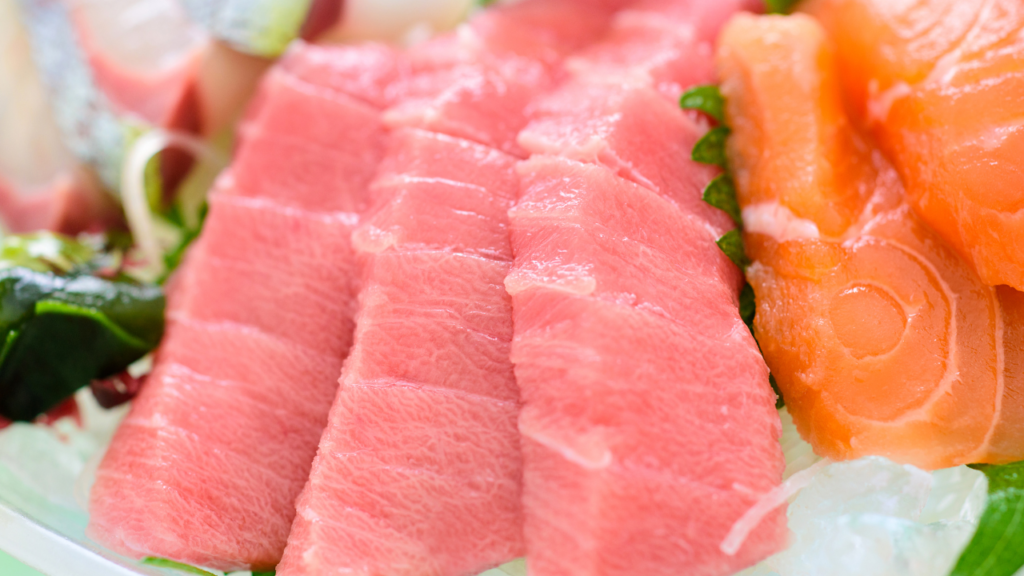
Fatty fish like salmon, mackerel (bangda), sardines (mathi), trout and hilsa are some of the best sources of the long-chain omega-3 fats EPA and DHA. Your body can only make tiny amounts of these from plant omega-3, so fish is the most reliable source.
Fatty fish also gives high-quality protein, vitamin D, vitamin B12 and selenium. Eating it is linked with better heart health, eye health and brain function. Aim for 2 portions of fish a week, with at least one being oily fish.
6. Nuts

Almonds, walnuts, cashews, pistachios and peanuts are high in healthy unsaturated fats and also give protein, fibre, vitamin E, magnesium and potassium. Walnuts stand out for their plant omega-3 content.
People who eat a small handful of nuts most days tend to have a lower risk of heart disease. The catch is calories: nuts are easy to overeat. A serving is about 30 g, roughly 20 to 25 almonds or a small fistful.
Fat content: about 50 to 65 g per 100 g, depending on the nut.
7. Olive Oil

Olive oil, especially extra virgin, is the main fat in the Mediterranean diet, one of the most studied heart-healthy eating patterns. It is rich in monounsaturated oleic acid and antioxidants like vitamin E and polyphenols, which have anti-inflammatory effects.
Use extra virgin olive oil for salads and light cooking. For Indian high-heat cooking, mustard oil and groundnut oil are also good everyday choices. All oils have about 120 calories per tablespoon, so measure them instead of pouring.
8. Full-Fat Yogurt

Full-fat yogurt (dahi) is a nutritious food that gives good-quality protein, calcium, phosphorus, potassium, vitamin B12 and probiotics for gut health. Most of its fat is saturated, with smaller amounts of mono and polyunsaturated fat.
Research suggests fermented dairy like yogurt may be neutral or even helpful for heart health, unlike processed meats. Pick plain yogurt and add your own fruit, because flavoured versions often have a lot of added sugar.
9. Dark Chocolate

Dark chocolate with 70% cocoa or more is a healthy treat when eaten in small amounts. Its fat comes from cocoa butter, which is a mix of saturated (mainly stearic acid, which has little effect on cholesterol) and monounsaturated oleic acid.
It is rich in flavanols and polyphenols, antioxidants that may help blood flow and heart health. It is also calorie-dense and still contains sugar, so keep it to 1 or 2 squares (about 20 to 30 g) a day.
Fat content: about 40 to 45 g per 100 g bar.
10. Peanut Butter

Peanut butter is a healthy high-fat food when you eat it in moderation and choose a good one. It is rich in monounsaturated and polyunsaturated fats and gives protein, vitamin E, niacin, folate, potassium and magnesium.
Choose peanut butter made only from peanuts (and maybe salt). Many brands add sugar and palm oil. Two tablespoons, about 32 g, is one serving and has around 190 calories.
Fat content: about 50 g per 100 g.
Indian High-Fat Foods That Can Be Healthy
- Ghee: mostly saturated fat, so use 1 to 2 teaspoons a day for flavour rather than a large spoon on every roti.
- Groundnuts (peanuts) and groundnut oil: cheap, rich in monounsaturated fat and great in poha, chutneys and chikki.
- Mustard oil: contains monounsaturated fat and some plant omega-3.
- Paneer: gives protein and calcium along with its fat. 75 to 100 g is a sensible portion.
- Coconut: fresh coconut gives fibre too, but its fat is mostly saturated, so use moderate amounts.
- Eggs: the yolk has healthy fats, vitamin D, B12 and choline.
- Til (sesame seeds) and walnuts: easy to add to chutneys, laddoos and salads.
How Much Fat Should You Eat Per Day?
Most guidelines suggest getting about 20 to 35% of your daily calories from fat. On a 2,000 calorie diet, that’s roughly 45 to 75 g of fat a day. Keep saturated fat under about 10% of calories (around 20 g on 2,000 calories) and avoid trans fats as much as you can.
| Daily calories | Fat (20 to 35%) | Saturated fat limit (10%) |
|---|---|---|
| 1,500 | 33 to 58 g | about 17 g |
| 2,000 | 44 to 78 g | about 22 g |
| 2,500 | 56 to 97 g | about 28 g |
Fat has 9 calories per gram, more than double carbs and protein (4 each). If you’re trying to lose weight, measure oils, nut butters and nuts. If you’re trying to gain weight, healthy fats are an easy way to add calories.
Fat Foods for Different Types of Diets
Low-Fat Foods
- Fish (white fish like rohu or pomfret)
- Egg whites
- Legumes like dal, chana and rajma
- Tofu
- Vegetables
Low-Carb High-Fat Foods
- Avocado
- Nuts and seeds
- Olive oil
- Cheese
- Coconut oil (in moderation, because it is high in saturated fat)

More ideas here: healthy high-calorie low-carb foods.
High-Protein Low-Fat Foods
- Chicken breast
- Turkey breast
- Lean beef
- Egg whites
- Greek yogurt (low fat)
High-Carb Low-Fat Foods
- Oatmeal
- Whole grain cereals
- Popcorn (air-popped)
- Potatoes
- Whole grain bread
Frequently Asked Questions
Are high-fat foods bad for you?
Not all of them. Foods with healthy fats, like nuts, seeds, avocado, olive oil, eggs and fatty fish, are good for your heart and brain. Fried foods and foods high in trans fats are the ones to limit.
How much fat should I eat per day?
Guidelines usually suggest getting about 20 to 35 percent of your daily calories from fat. Most of it should come from unsaturated fats, with saturated fat kept under about 10 percent of calories.
Do high-fat foods make you gain weight?
Fat has 9 calories per gram, more than carbs or protein, so it is easy to overeat. But healthy fats only cause weight gain if you eat more calories than you burn. Watching portion sizes is the key.
What are good high-fat foods for vegetarians?
Nuts, seeds, peanut butter, avocado, paneer, full-fat yogurt, ghee in small amounts, and olive or mustard oil are good options. Our vegetarian protein foods list has more ideas.
Are eggs healthy even though they contain fat?
Yes. For most healthy people, eating eggs in moderation fits into a balanced diet. Eggs give high-quality protein, healthy fats and vitamins like B12 and D.
Is ghee a healthy fat?
Ghee is mostly saturated fat. A teaspoon or two a day can fit into a healthy diet, but it shouldn’t be your main cooking fat. Mix it up with mustard, groundnut or olive oil.
The Bottom Line
Healthy high-fat foods like avocado, nuts, chia and flax seeds, fatty fish, olive oil, peanut butter, full-fat yogurt, cheese and dark chocolate give you important fats along with protein, fibre, vitamins and minerals. Many of them contain monounsaturated and polyunsaturated fats that help keep cholesterol and inflammation in check and support heart health.
Because fat is calorie-dense, portions matter. Choose mostly unsaturated fats, keep saturated fat moderate, avoid trans fats, and measure your oils and nut butters. Do that, and fat becomes a helpful part of your diet, not something to fear.
Read More:
15 Healthy High-Calorie Low-Carb Foods
How to Lose Weight Fast in 2 Weeks?
How Much Weight Can You Lose in a Month?
The Ultimate Guide for Losing Belly Fat Fast and Naturally
How Long Does Pre-Workout Last?
How to Quickly Lose Belly Fat in 2 Weeks: 10 Effective Tips

About the Author: Nikilesh Srinivasan
Nikilesh Srinivasan has been in the fitness industry for more than 6 years and has trained many people, from complete beginners to regular gym-goers. He writes practical workout and nutrition guides based on that experience, checked against trusted research.


